How Does Executing Wall Mesh Plaster Prevent Wall Destruction?
The Vital Role of Non-Structural Walls in Structural Stability
Non-structural or infill walls make up a vast portion of a building's volume. Although these components do not bear the gravity loads of roofs and beams, they play an extremely critical role during an earthquake. Improper restraint of these walls can lead to their sudden collapse, resulting in irreparable financial and human losses. This is why civil engineers always look for modern solutions like wall mesh plaster to reinforce and secure these components.
In the past, traditional methods such as angle bracing (نبشیکشی) and connections with low flexibility were used. In addition to drastically increasing the building's dead load, these methods caused widespread destruction and cracking in surrounding walls during earthquakes due to stress concentration. To better understand the importance of this topic, we recommend reading the article Why Buying Wall Mesh Prevents Casualties to familiarize yourself with the safety dimensions of this system.
Using modern reinforcement systems not only prevents falling debris but also significantly helps maintain wall integrity. According to specialized studies published on the reputable website Retrofitting Non-Structural Walls with Wall Mesh, utilizing composite meshes can dramatically improve the seismic behavior of the structure.
Challenges of Traditional Methods in Wall Restraint
Traditional angle bracing has weaknesses that have forced engineers to change their approach. These problems include substandard welding, excessive force transfer to columns, and lack of surface integrity. In contrast, the correct execution of new systems distributes the stresses caused by inter-story drift across the entire surface of the wall.
- Increase in the structure's dead load in traditional methods
- Stress concentration at angle brace connection points
- High repair and reconstruction costs after an earthquake
- Need for extensive demolition and rework
By leveraging cutting-edge engineering technologies, the Novin Wall Mesh Department has managed to provide a flawless solution to these challenges by offering high-quality products such as fiberglass meshes and specialized plasters.
Components Composing the Wall Mesh System
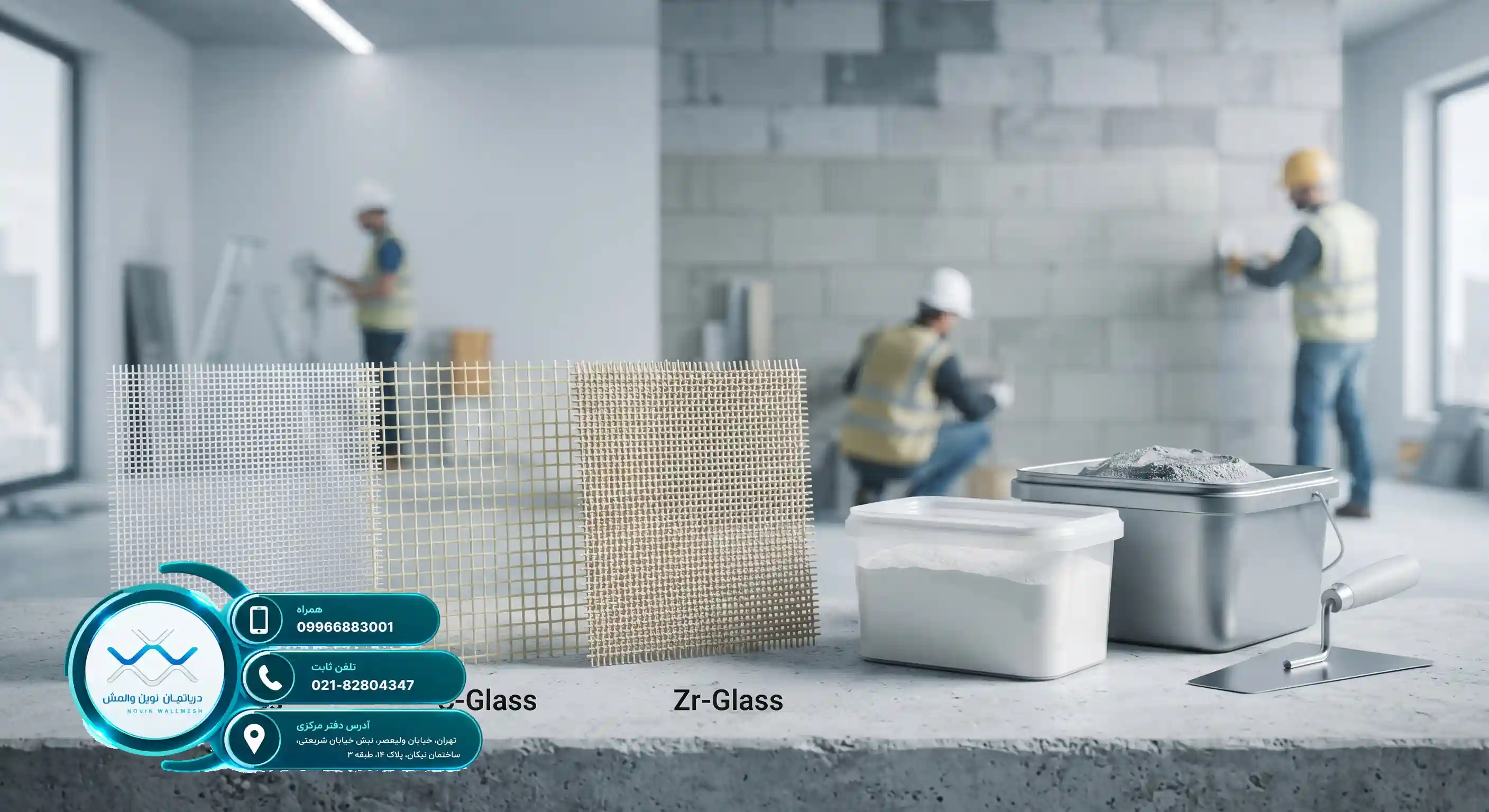
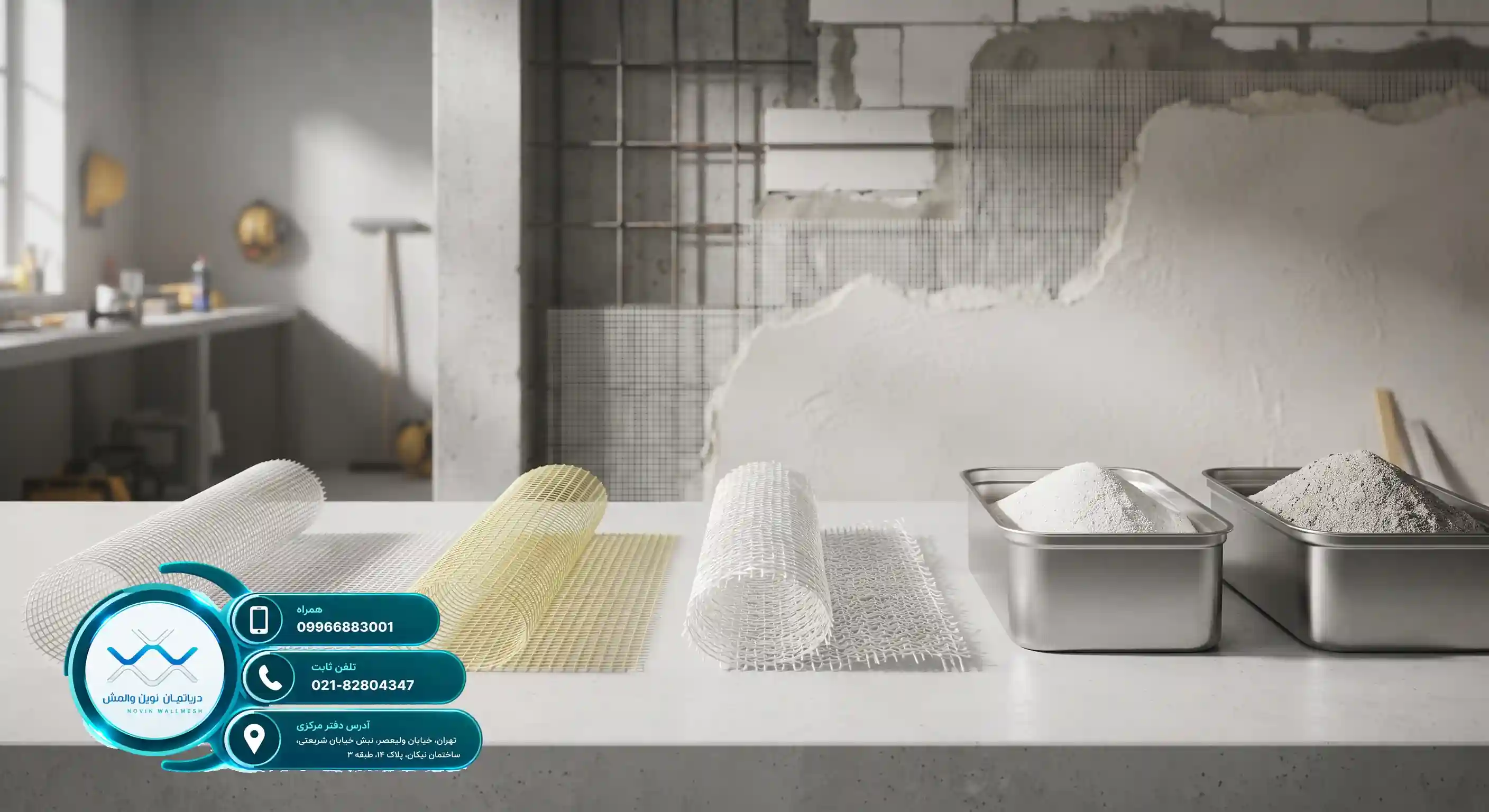
The wall mesh system consists of two main and key components: fiberglass mesh and a plaster layer. The fiberglass mesh acts as the reinforcing element, neutralizing tensile stresses caused by earthquakes. Alongside it, the plaster layer, which can be gypsum- or cement-based, is responsible for covering, creating adhesion, and transferring loads between the mesh and the wall surface.
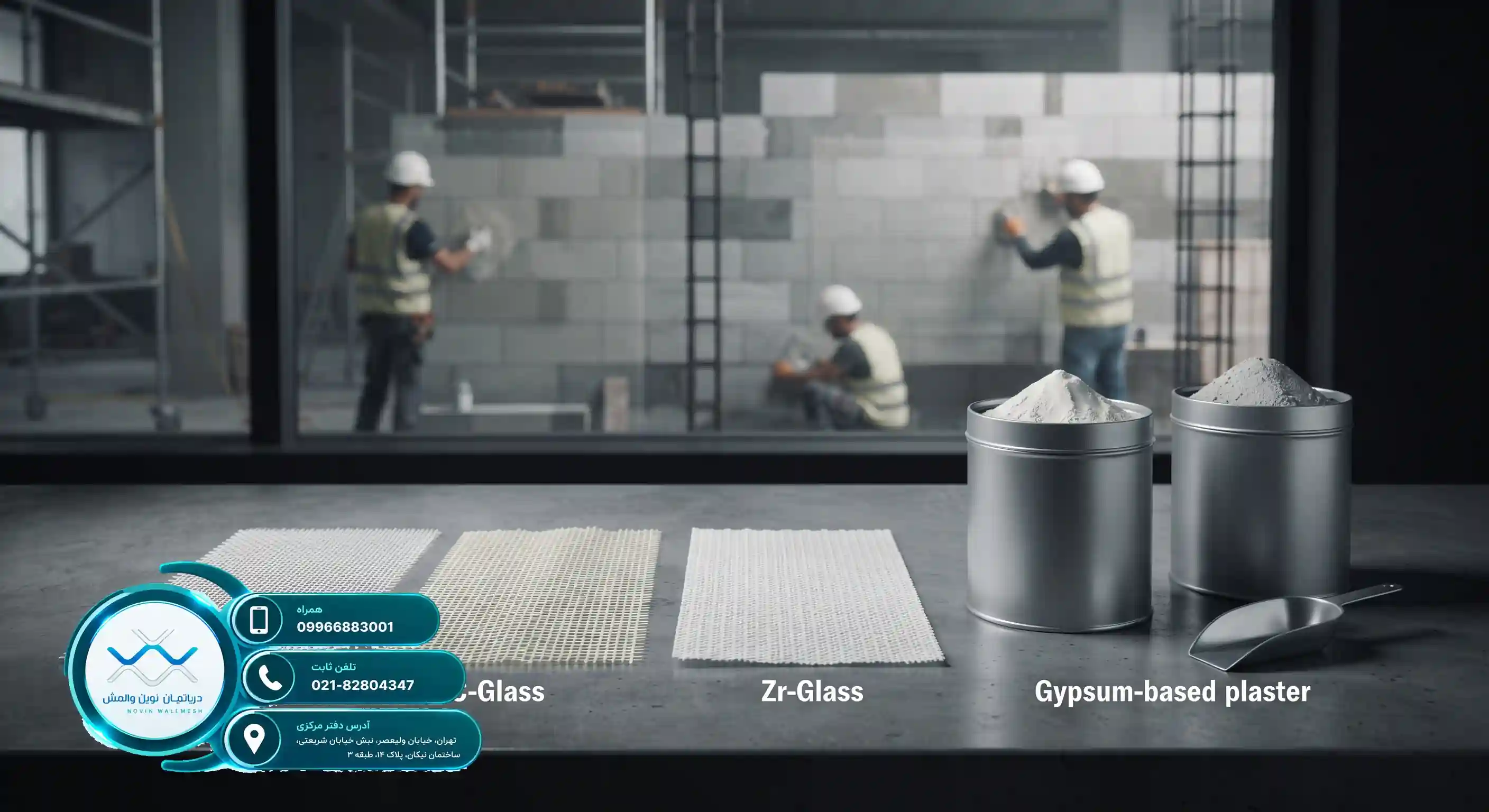
The choice of mesh and plaster type directly depends on environmental conditions and project specifications. For example, E-Glass meshes are used for dry indoor environments, C-Glass meshes with appropriate chemical resistance, and Zr-Glass meshes resistant to concrete's alkaline environments. To precisely determine the amount of materials required for each project, you can use the guidance in the article How to Calculate the Required Footage for Buying Wall Mesh? to prevent material waste.
The Role of the Plaster Layer in Wall Integrity
The base plaster layer applied over the mesh plays a role far beyond a mere surface coating. By creating a continuous network, this layer homogeneously distributes the forces applied to the wall. In the proper execution of wall mesh plaster, the thickness of the plaster layer must be such that it completely encapsulates the mesh network without leaving any empty spaces.
Precise application of the plaster layer over the fiberglass mesh is the main secret to preventing hairline cracks and structural destruction during an earthquake.
- Gypsum-based plaster suitable for interior and dry walls
- Cement-based plaster resistant to moisture and outdoor environments
- Creating extraordinary adhesion with subsurface materials
- Preventing the creation of thermal and acoustic bridges
Experts at the Novin Wall Mesh Department, by carefully examining structural conditions, suggest the best combination of products for your project to achieve the highest level of safety and durability.
Root-Causing Damages in Traditional Walls
Examining the damage left behind by past earthquakes shows that walls restrained using traditional methods like angle bracing have suffered the most damage. The main reason for this is the excessive rigidity of metal connections, which prevents the free movement of the structural frame. When the frame deforms due to an earthquake, columns press against the wall, causing bricks and blocks to crush. This phenomenon is usually accompanied by complete wall collapse and falling debris.
Furthermore, the welding performed at angle brace installation sites is usually of poor quality and disintegrates under successive vibrations. This execution flaw turns the wall into a ticking time bomb that can be dislodged with the slightest shake. In contrast, using the wall mesh system—due to the inherent flexibility of fiber meshes—prevents such stress concentrations and absorbs earthquake energy.
Damages Caused by Lack of Flexibility in Walls
Wall destruction not only creates staggering financial costs but also entails irreparable life hazards. Statistics show that a high percentage of earthquake injuries occur due to the collapse of non-structural walls.
- Crushing of blocks at column connection points
- Creation of diagonal and deep cracks in the wall body
- Complete separation of the wall from the main structural frame
- Need for complete demolition and reconstruction after every minor incident
By comparing costs, it becomes clear that reviewing topics like How Reinforcing Wall Mesh Price Affects Retrofitting Costs can give employers an open view to prevent heavy demolition costs with a reasonable initial investment.
How Does Wall Mesh Absorb Stresses?
The operational mechanism of wall mesh plaster is based on the uniform distribution of tensile and shear stresses across the wall surface. When an earthquake wave strikes the wall, lateral forces try to push the wall out of its plane. In this state, the fiberglass mesh embedded in the plaster layer acts as a strong tensile element, preventing the tearing and collapsing of materials.
This system allows the wall to exhibit more ductile behavior. In other words, instead of the wall breaking in a brittle and sudden manner, it absorbs earthquake energy through small, controlled deformations. This unique feature is one of the great achievements of modern civil engineering, which is also emphasized in reputable international articles.
The Role of Mesh and Plaster Synergy in Ultimate Strength
The effectiveness of this system is the result of close collaboration between glass fibers and the plaster matrix. Fiberglass mesh has high tensile strength but cannot withstand environmental factors and localized impacts on its own. The plaster layer (cementitious or gypsum) encapsulates this mesh and creates surface integrity.
The synergy between the fiberglass mesh and the specialized plaster from the Novin Wall Mesh Department creates a resistant, flexible, and completely integrated wall against earthquakes.
To learn more about the global standards of this technology, you can refer to construction reference sources such as Retrofitting Non-Structural Walls with Wall Mesh to familiarize yourself with the scientific details of its execution.
- Homogeneous distribution of lateral earthquake forces
- Prevention of large and deep cracks
- Maintaining wall stability even after initial cracking
- Increasing the cohesion of masonry materials with structural elements
By using standard products from the Novin Wall Mesh Department, the execution of this mechanism reaches its highest level of efficiency.

How to Retrofit a Wall Without Demolition?
One of the biggest advantages of the wall mesh system is that its execution does not require the demolition of existing walls or deep chiseling. This feature is especially important in seismic improvement projects for residential and office buildings, as occupants can benefit from retrofitting advantages without needing to fully evacuate the building.
The execution steps of this system are very simple yet require high technical precision. First, the wall surface is thoroughly cleaned, and any contamination, grease, or mortar waste is removed. Then, the fiberglass mesh is fixed in place using appropriate mechanical anchors. In the final stage, the gypsum- or cement-based plaster layer is applied over the mesh.
Step-by-Step to Flawless Wall Mesh Execution
Strict adherence to execution steps guarantees proper wall performance during an earthquake. Any negligence in surface preparation or plaster thickness can reduce the final quality of the work.
| Step |
Execution Operations Description |
Key Tips |
| First Step |
Surface preparation and cleaning of the wall |
Removing dust and moistening the surface |
| Second Step |
Cutting and installing fiberglass mesh |
Precise alignment and anchoring with special dowels |
| Third Step |
Executing the first plaster layer |
Complete coverage of the mesh and creating uniform thickness |
| Fourth Step |
Final surface finishing |
Preparation for painting or skimming |
Using quality materials provided by the Novin Wall Mesh Department in each of these steps guarantees the final quality of the project and prevents damages caused by improper execution.
Economic Analysis of Wall Mesh Execution Compared to Angle Bracing
Many employers initially assume that traditional methods like angle bracing cost less than modern systems. However, by carefully examining hidden costs, it becomes clear that wall mesh plaster is much more cost-effective in the long run. In traditional methods, the costs of purchasing ironwork, welding, anti-rust coating, repeated demolitions, and plaster-and-soil repairs are extremely high.
In contrast, the wall mesh system drastically reduces execution costs by eliminating heavy ironwork expenses and removing the need to demolish built walls. Additionally, fast execution speed leads to remarkable savings in labor wages. To learn how to accurately estimate costs, the article How Reinforcing Wall Mesh Price Affects Retrofitting Costs is a very complete guide.
Long-Term Financial Benefits of Modern Retrofitting
Investing in building safety is actually a form of asset insurance. A wall reinforced with wall mesh will suffer minimal damage during natural disasters and will not require exorbitant reconstruction costs.
- Significant reduction in metal material procurement costs
- Savings in execution time and reduction of worker wages
- No need for frequent repairs of wall cracks
- Increase in property added value due to safety standardization
By utilizing fiberglass meshes and standard plasters from the Novin Wall Mesh Department, you can bring your projects to completion with the highest economic and engineering quality.
Superior Features of Novin Wall Mesh Products
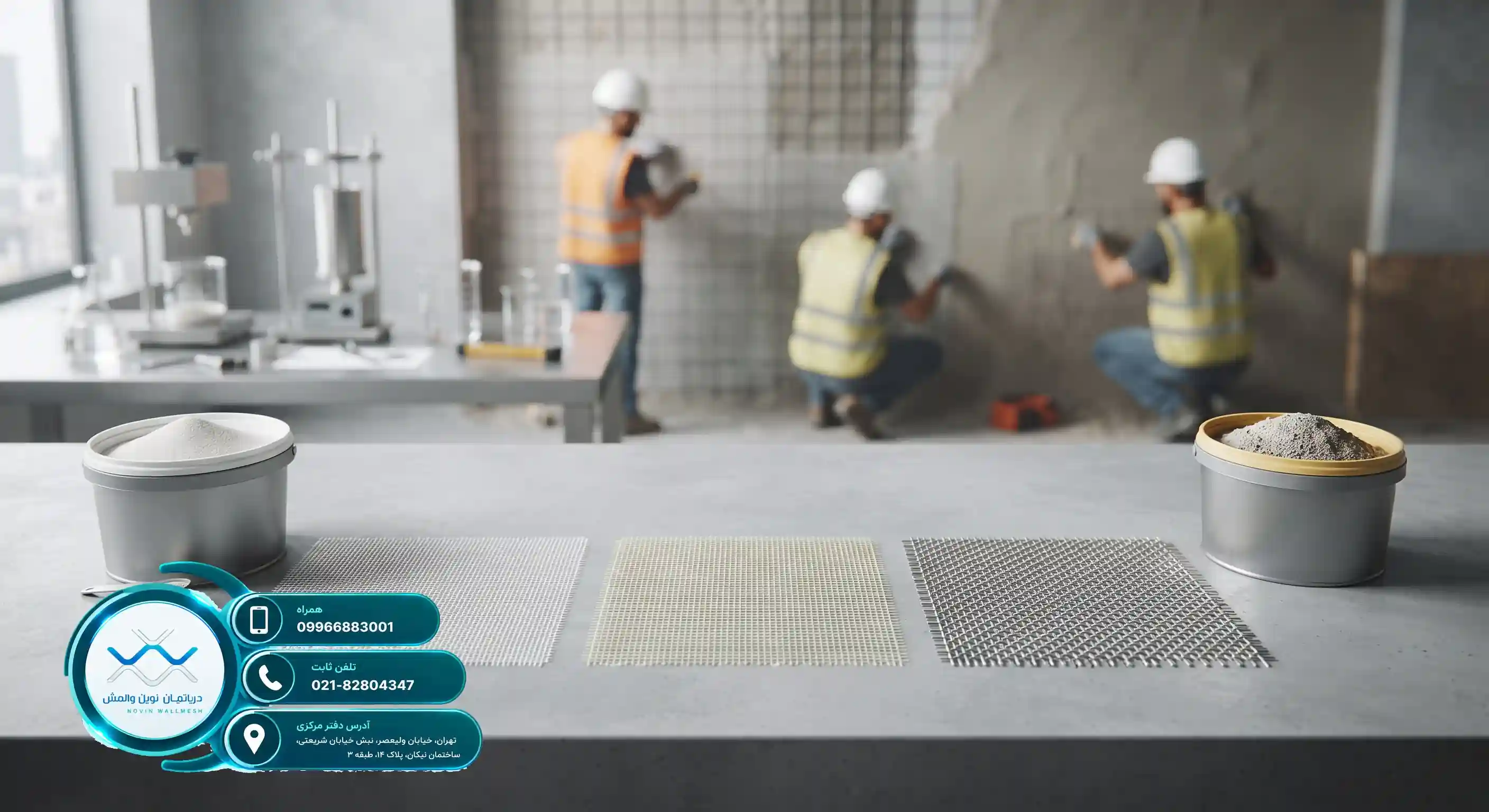
Choosing standard materials is the primary key to success in implementing retrofitting systems. The Novin Wall Mesh Department has elevated construction industry standards by offering a complete portfolio of specialized products, including various fiberglass meshes (E-Glass, C-Glass, Zr-Glass) and gypsum- and cement-based plasters. Produced relying on state-of-the-art global technologies, these products possess very high tensile strength and durability.
The collection's fiberglass meshes are resistant to corrosion, concrete's alkaline environments, and mechanical stresses, and they blend well with the plaster layer. This chemical and mechanical compatibility ensures that the final system exhibits maximum performance against lateral loads and earthquakes.
Why Do Plaster and Mesh Quality Matter?
Using low-quality mesh or unsuitable plaster can undermine the entire retrofitting system. Some miscellaneous products in the market suffer from degradation or loss of strength after a while. This is why experienced engineers always emphasize using reputable brands.
The superior quality of Novin Wall Mesh Department products guarantees peace of mind for engineers and residents against potential earthquake hazards.
- Fiberglass meshes with diverse applications in various environmental conditions
- Cement- and gypsum-based plasters with extraordinary adhesion
- Full compliance with national building codes and standards
- Technical support and specialized consulting throughout all project stages
For more information regarding the selection of suitable products, reading the article Why Buying Wall Mesh Prevents Casualties will be very helpful.
The Building Industry Outlook in Seismic Safety
With the advancement of earthquake engineering science, the construction industry's approach has shifted from "resistance against destruction" to "damage control and ductility." The wall mesh system is one of the most prominent examples of this modern approach, having successfully become a reliable substitute for costly and destructive traditional methods. The future of construction in Iran and worldwide is moving toward the use of lightweight, durable, and eco-friendly composite materials.
The growing expansion in the use of these systems indicates the public acceptance by engineers and employers toward scientific and engineered methods. Being a pioneer in this arena, the Novin Wall Mesh Department is constantly striving to play a major role in increasing the country's structural safety by updating technical knowledge and offering high-quality products.
Final Recommendations for Engineers and Employers
Principled execution of wall mesh requires a combination of technical knowledge, rigorous supervision, and the use of standard materials. Considering the countless benefits of this method in preventing wall destruction and preserving human lives, investing in this field will certainly bring high added value.
- Paying attention to precise engineering calculations before project execution
- Using the guidance from the article How to Calculate the Required Footage for Buying Wall Mesh?
- Purchasing standard materials from reputable manufacturers like the Novin Wall Mesh Department
- Continuous supervision over the proper execution of construction details by trained crews
By observing these principles, we can build safe, sustainable, and disaster-resilient structures.
| Frequently Asked Question |
Expert Answer |
| What is wall mesh plaster? |
It is a modern system for retrofitting non-structural walls, consisting of a combination of fiberglass mesh and a gypsum- or cement-based plaster layer. |
| Why does wall mesh prevent wall destruction? |
Because by uniformly distributing tensile stresses and creating flexibility, it prevents material crushing and the separation of the wall from the structural frame. |
| Is wall demolition required to execute wall mesh? |
No, one of the biggest advantages of this system is the lack of need to demolish existing walls and its easy application on prepared surfaces. |
| What types of fiberglass mesh are available in the Novin Wall Mesh Department? |
E-Glass, C-Glass, and Zr-Glass meshes are supplied to suit various project requirements. |
| What is the difference between gypsum and cement plaster in wall mesh? |
Gypsum plaster is used for dry interior spaces, while cement plaster is applied in humid and outdoor environments. |
| How do we calculate the required footage of wall mesh? |
According to wall dimensions, openings, and code regulations explained in detail in the site's articles. |
| Does executing wall mesh increase construction costs? |
Compared to heavy angle bracing costs and traditional demolition repairs, wall mesh is much more cost-effective. |
| What is the role of the Novin Wall Mesh Department in retrofitting? |
Providing engineering solutions, specialized consulting, and supplying standard quality materials to reinforce non-structural walls. |
| Does wall mesh increase the building's dead load? |
No, unlike traditional methods with heavy angles, this system adds a negligible weight to the structure. |
| How can one obtain Novin Wall Mesh Department products? |
Through the official website of this collection at civildep.ir and by contacting the sales and technical support unit. |
Specialized reference of the Novin Wall Mesh Department (civildep.ir) and national codes for seismic retrofitting of non-structural walls.
:: برچسبها:
How Does Executing Wall Mesh Plaster Prevent Wall Destruction? ,
:: بازدید از این مطلب : 0
|
امتیاز مطلب : 0
|
تعداد امتیازدهندگان : 0
|
مجموع امتیاز : 0


 عضو شوید
 عضویت سریع
 آمار مطالب
 آمار بازدید


